Connected

This morning I awoke to discover I had 44 new friends.

Technically, not friends; this wasn’t Facebook. It was LinkedIn, which makes them connections. I had had an accident – a social-media accident.

It happened last night while I was talking with Janice, my actual friend and tireless cheerleader since we met on the first day of sixth grade, about 45 years ago. My Vancouver apartment has no landline and I still hate cellphones (particularly the one that was allowed to ring five or six times during the Met HD broadcast of “Ernani” this morning). So I’ve been relying on Gmail’s free Internet phone, which uses my laptop’s built-in microphone and speakers. Making a hands-free phone call while sitting in front of a laptop can be dangerous, especially when Mercury is retrograde.

Since Janice is pushing me to do more networking, and since I had just posted an update on LinkedIn crowing about my students’ performance on their final exam,  I was noodling around on the site to see if I had missed anyone with whom I should be connecting.  Somehow I got to a screen I had never seen before, apparently a list of my contacts imported from Gmail. As I weeded them out, I must have hit the wrong button, because the next message informed me that I had sent out 454 invitations to connect.

I’m no Luddite, but neither am I a terribly social person, let alone a social-media person. Residual shyness from an isolated childhood usually makes me uncomfortable with anyone I haven’t known for a good 10 years,  preferably with a proper introduction. My parents used to say, “It’s not what you know, it’s who you know,” but in a sneering, resentful way. They never suggested that making connections might an important life skill, as I learned too late.

I have a Facebook page but, having been burned, rarely use it. Last week I had to set up a Twitter account so I could grade exams and final projects, which have a large social-media component; I now have six followers, though I suspect there’ll be precious little to follow. (In any case, Twitter is gibberish, and badly spelled, poorly punctuated gibberish at that.) LinkedIn, being professionally oriented, is about my speed.

“Important: Only invite people you know well and who know you,” it advises. The reasons: “Connecting to someone on LinkedIn implies that you know them well: They’ll have access to people you know.  Others may ask you about them and vice versa. You’ll get updates on their activity.” Recipients of invitations may ignore them or indicate they don’t know you. I’m sure a good number of the 454 have already done just that, probably including some former New York Times colleagues, and maybe the old boyfriend I once found on LinkedIn, who used to have blond curls down to s shoulders and now looks like John McCain. But once I got over the deep embarrassment of being an inadvertent spammer, the responses surprised and pleased me.

At least 10 were immediate, automated “out of office” replies, and a number of others indicated they had gone to various customer-service departments I had consulted. One polite man pleaded a senior moment and asked exactly how he knew me; I wrote back that he didn’t, that we had probably had a brief e-mail exchange sometime in the last four years. Several people, even further removed from the social-media generation than I, begged to be excused, since they don’t have LinkedIn accounts.

But the acceptances! Students and colleagues here at UBC, to whom I am most grateful. Students from my English-for-business course at Columbia last summer, some from my class in Poland two years ago and at least one in China. Someone from my college newspaper, and two people still at The Times. A Polish ballet dancer I interviewed in Warsaw. Canadian press agents I’ve just met. A Brazilian professor who was interested in English lessons this winter in New York, which I couldn’t give her because I was coming to Vancouver.  Academics with whom I’ve had only the most tenuous connections. A fellow usher at Lincoln Center Theater. The daughter of a friend who died nearly two years ago; in her photo I see her mother’s face. My niece and great-niece. And at least seven people I can’t identify. Do they know me, or think they do, or are they just networking?

If this is my new social network, it stretches around the world and across my professional spectrum. At first I wished  LinkedIn had a great big “undo” button, but now I’m not so sure. At this writing I have 143 connections – not a huge number, compared to those who really work the system, but nearly double what I had yesterday at this time. Some are people I’d have been too intimidated to approach in real life, and maybe, just maybe, they felt the same way about me. In any case, welcome to my world. Make that 149.
40 years later, the same story

Garry Trudeau is at it again, and he’s sending shivers down my spine.

“A middle-aged, male state legislator will be with you in a moment,” said the last panel in Monday’s “Doonesbury,” the first in this week’s series skewering the recent Texas law that requires women seeking abortions to undergo sonograms first. On Tuesday, the middle-aged, male state legislator asked the woman: “Do your parents know you’re a slut?” By Thursday, she was in the examining room, with the doctor announcing: “The male Republicans who run Texas require that all such abortion-seekers be examined with a 10-inch shaming wand. . . . By the authority vested in me by the GOP base, I thee rape.”

Pretty strong language for a comic strip. Some newspapers canceled “Doonesbury” for the week; some  pulled it from the printed paper and referred readers to their websites. (That’ll keep the kids from seeing it!) Some deemed it inappropriate for comics pages but moved it to the editorial page — not a bad option.

And here some of us thought these issues were settled almost 40 years ago.

While the entire week of “Doonesbury” is unusually outspoken and graphic, even for Trudeau (known for his stands against the Vietnam and Iraq wars, among other issues), it was Monday’s strip that hit a nerve. It took me back to the night of Jan. 22, 1973, and a brush with a middle-aged, male state legislator over abortion that I count as my big break in journalism. Women of a certain age should recognize that as the date the Supreme Court handed down its decision on Roe v. Wade, which struck down anti-abortion laws across the country as a violation of women’s right to privacy under the due process clause of the 14th Amendment, recasting abortion as a private matter between a woman and her doctor.

That was the first big news day of my life, and still one of the biggest, unsurpassed until 9/11. I was a freshman reporter for The Daily Collegian, Penn State’s independent student newspaper.  As if Roe v. Wade weren’t enough, Lyndon Johnson died that day, and for a while it looked as if Richard Nixon would announce the end of the Vietnam war that night – and The Collegian has a six-page paper.  (Luckily, Nixon waited a day and the paper was able to go up two pages.) After an inauspicious fall term on the residence hall beat, I had talked my way onto the women’s beat, which was exploding in early 1973.

“Do you believe in Martin P. Mullen?” began The Collegian’s editorial the next day. Mullen, about 52 at the time and thus squarely in middle age, was a state legislator from Southwest Philadelphia, a Roman Catholic and, according to his 1996 obituary in The Philadelphia Inquirer, “once the legislature’s most ardent foe of abortion, adultery and pornography.” (The obit closed by noting, “Contributions can be made to the Pro-Life Coalition of Delaware County.”) Mullen had been on a much-publicized anti-abortion crusade for months, so he was an obvious source to call for a reaction story. Though Roe v. Wade clearly fell into my beat, I was judged not yet experienced enough to interview a state legislator. so that assignment went to my not-yet-boyfriend. As he interviewed Mullen by telephone, I listened silently on an extension and took notes.

Somehow I must have helped pull the story together, for three days later, on my 18th birthday, I walked into the Collegian office and was stunned to find myself promoted to junior reporter, with a $5-a-week stipend. A couple of days later, though, I had my comeuppance when I was assigned to find out if the two gynecologists practicing in town would now perform abortions. One, a middle-aged man, bit my head off, demanding to know what right I had to call him at home at dinnertime on a Sunday night to ask such a question. “He’s right,” I thought – perhaps my first clue that I would never make a hard-news reporter.

For the record, I am not pro-abortion; nobody is. Abortion is not a decision to be taken lightly, but rather should be a last resort, performed in a timely manner. Surely three months is ample time to decide if you’re ready to take on a commitment that will last at least 18 years, perhaps a lifetime. The procedure known as “partial-birth abortion” is as repugnant to me as it is to the most rabidly conservative middle-aged, male state legislator. I’ve never had an abortion; frankly, I find that contraception, used conscientiously, works pretty well. But I have friends who have, probably more than I know, and I respect their decisions. If that makes me “anti-life” in the eyes of, say, Rick Santorum, one of the kind of people I left Pennsylvania to get away from, then so be it.

Fortunately, women seem to be taking notice. Last Saturday The New York Times  ran an article headlined “Centrist Women Tell of Disenchantment With Republicans,” citing “the battle over access to birth control and other women’s health issues that have sprung to life on the Republican campaign trail in recent weeks.” One woman interviewed, exactly my age, said, “This seemed like a throwback to 40 years ago. . . . If they’re going to decided on women’s reproductive issues, I’m not going to vote for any of them. Women’s reproduction is our own business.” Another woman commented: “They’re nothing but hatemongers trying to control everyone, saying, ‘Live as I live.’ ”

Mullen’s obit quoted him as having said in 1978: “I’m for good and against bad, let’s put it that way.  I’ve made my choice.” The problem is, people like him want to impose their choices — their definitions of good and bad — on everyone. They’re entitled to their opinions, and their right to publish them, but so is Garry Trudeau. By the way, “Doonesbury” was one of four syndicated features to which The Collegian subscribed during my years there (along with “Peanuts” and the columnists Nicholas von Hoffman, a liberal, and James J. Kilpatrick, a conservative). I can’t swear to it, but I think we may have run it on the editorial page.

Thankfully, I’m past having a personal stake in these reproductive issues, but not past caring about them. I wouldn’t wish the latter-day Martin P. Mullens on any woman facing one of the hardest decisions of her life.

On your toes, or not

This seems to have been dance week, and not just because I spent two evenings revisiting “The Red Shoes” and “Black Swan” (the things I do for this project!) as research for “The Leap.” Over the weekend, I had back-to-back exposure to two sides of the Canadian dance world, one timeless, one timely:  the Coastal First Nations Dance Festival at UBC’s Museum of Anthropology, and “Walking Mad,” a triple bill by Ballet BC.

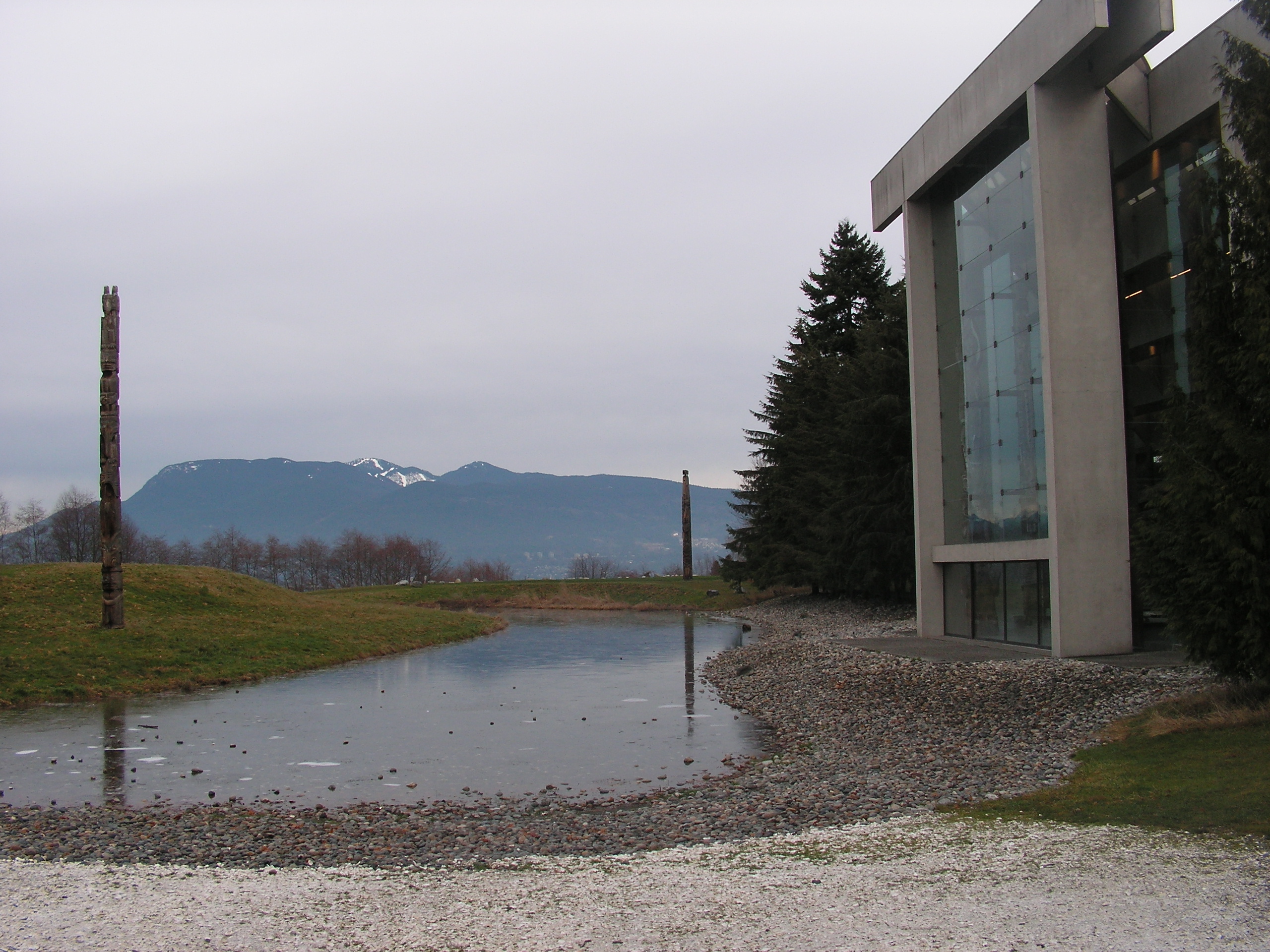
The setting: UBC's Museum of Anthropology.

The museum on the far northwest corner of campus, conveniently right around the corner from the journalism school, could not be a more appropriate place to see native dance. It stands on a cliff overlooking Burrard Inlet and the North Shore mountains beyond. (If only this had been an outdoor summer festival!) The land, according to program notes, is “un-ceded traditional territory of the Musqueam Nation”; it is not uncommon here for performing arts venues to make such acknowledgments. The view travels with you inside the galleries, since one wall several stories high is glass. It formed a backdrop for the festival stage set in the main gallery – a wilderness answer to Jazz at Lincoln Center’s Allen Room looking out at the lights of Manhattan.

Native dance is less my fach than classical ballet. But I recently noticed that the cultural events I was attending in Vancouver – the symphony, the Metropolitan Opera’s “Live in HD” broadcasts, the Vancouver Opera live and in person in a couple of weeks, the National Theatre Live from London – were just a little too much like what I would see at home, and that I might be missing an opportunity. The First Nations festival offered an additional, irresistible attraction: dancing with masks. As the owner of one of New York City’s better mask collections, I had to go.

Friday’s opening-night program consisted of six acts, some better than others, from full companies to a solo hoop dancer. Two troupes used masks: the headlining Dancers of Damelahamid and the closing Rainbow Creek Dancers. Watching them, I learned why so many of the masks I’ve seen here in shops galleries have no eyeholes. (In part to avoid buying every mask I see, I have a rule that anything I add to the collection must be wearable – i.e., have eyeholes. Unless, of course, I really, really like one that doesn’t.) Here masks were not necessarily worn on the face. Some, like the bird-faced helmet masks with their long bills, are worn atop the head, like baseball caps with pointy brims, with the dancer’s full face exposed; smaller ones are part of headdresses. Oversized masks, like the ones I saw in the Vancouver Art Gallery some weeks ago, are not worn at all, but carried in front of the dancer. The hinged jaw of Rainbow Creek’s raven mask clacked rhythmically as its hinged jaws opened and closed; wearers of other bird masks, some on their heads, some smaller ones on their hands, followed suit. In the troupe’s closing number, an oversized salmon head bobbed above “water,” then danced, complete with a fluke that waved goodnight. Sadly, I didn’t take my camera — a decision I regret, since a number of people were shooting.

For an ultramodern building, the museum proved surprisingly atmospheric. Pale colored lights played off the totem poles surrounding the audience, suggesting the aurora borealis to an audience facing the night sky. Most haunting was the music, strong on choral, driven by percussion and, in the performance of the visiting Australian Aboriginal dancer Robert Bamblett, a didgeridoo. Of course I couldn’t understand the lyrics in native languages, but that only enhanced the effect.

The program was short on showmanship – too little attention to pacing; too many acoustically challenged speeches by people unskilled at public speaking; an ending that just ended, as opposed to a finale. But then, the point of these dances was never to put on a show. Their purpose was ceremonial, to honor the often-invoked ancestors and carry their traditions into the future. Judging from the audience, which ranged from elders beating time to the music to a crying baby, I’d say they’re succeeding.

Downtown the next evening, Ballet BC presented two new works choreographed by Canadians and a Canadian premiere by a Swede: artistic director Emily Molnar’s black-on-black “between disappearing and becoming”; Aszure Barton’s “Vitulare,” which blends elements of line dance, breakdance and flamenco, with a few shimmies and jazz hands mixed in; and the evening’s title piece, Johan Inger’s “Walking Mad,” a sometimes comedic, sometimes disturbing work to Ravel’s “Bolero” and Arvo Part. The entire program was resoundingly contemporary – not a tutu in sight – and the audience in the Queen Elizabeth Theatre responded, especially to the Barton, with enthusiastic applause, whistles and finally a standing ovation. The Ballet BC dancers seem equally at home on point (some lovely fluttering legs in the Molnar) and in a modern-dance idiom. It’s a company worth watching, as I will do again in the work of my student Suzanne Ahearne, who is documenting the week’s rehearsals and performances as her final project.

On my way to the ballet, I was heartened to see a crowd of perhaps 200 rallying at the adjoining Vancouver Playhouse in support of that theater’s resident company, which had just announced that financial problems were forcing it to close after 49 years. (I celebrated my birthday with a matinee there, a creditable production John Logan’s Tony Award-winning “Red.”) That night was to be the theater’s last performance, but judging by the reviews of “Hunchback,” the better show was outside. “This is a vigil, not a wake,” stated paper signs taped to the walls. Supporters declared their sentiments in messages chalked on the sidewalk: “Do not go gently [sic] into that good night” ; “There is a special providence in the fall of a sparrow,” from “Hamlet”; “Tennessee Williams was here” and “Sir Ian McKellen was here”; most simply but eloquently, “Theatre changes lives.” A poster signed by company members, and later by well-wishers, elaborated: “It is through cultural institutions like this theatre that the collective voice is heard, that consciousness and art has a home, and that life is breathed into the concrete and steel of this city. Vancouver needs culture to stay alive, vibrant, relevant; it’s more than just real estate.” That’s the lesson I’ve been trying to teach all semester, and I’m sure I haven’t said it any better. In an era when harsh economics have forced too many theaters to go dark, can’t someone please find a million dollars to keep this one in business?

Flunking out

“Failure is impossible,” or so said the Susan B. Anthony throw pillow I used to have in my living room. Anthony may have been right about the woman suffrage movement; she was wrong about me. And when failure strikes, it is humbling.

After more than 35 years editing daily newspapers, I’d have sworn there wasn’t an editing job I couldn’t handle. Deadline pressure? The breaking news stories I’ve gotten into various papers ranged from Nixon’s resignation to the Polish shipyard strikes in 1980 to any number of Oscar and Grammy nights – four editions in four hours. Style? Who’s more rigid about style than The New York Times? Technology? I have yet to meet the piece of software I can’t master. Or so I thought.

Last week I underwent training for an online editing service. It shall remain nameless; to paraphrase Shakespeare in “Julius Caesar,” the fault was not in my stars, but in my self. Its ad said freelancers who made a minimum commitment of 12 hours a week could earn $150 to $1,500. (As a point of comparison, Broadway ushering pays $50 a shift, topping out around $400 a week.) Having a fair amount of free time in Vancouver, I thought I’d give it a try as a way to keep a little revenue flowing when the semester and my salary end.

In the immortal words of Desiree Armfeldt: Disaster, darling.

For sale, cheap.

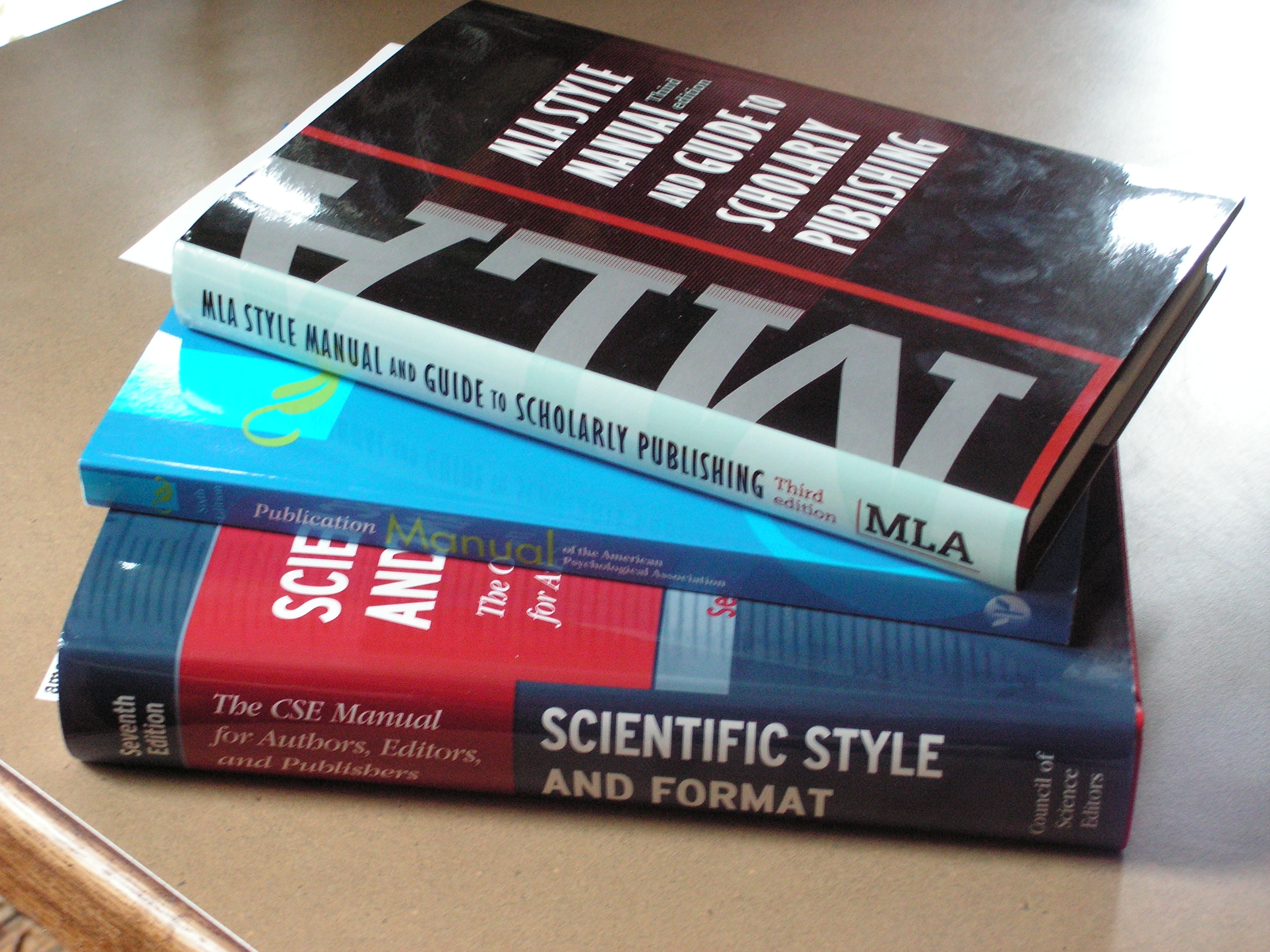
The online screening should have been my clue. On a multiple-choice test of 42 questions, I first scored only about 76 percent, out of the 95 required for further consideration. The spelling and grammar were easy; what surely tripped me up were the citation styles for the various academic style manuals this service uses — Chicago, Modern Language Association, American Psychological Association, Council of Science Editors and more.  I assumed I was disqualified, but to my surprise a senior editor phoned almost immediately to say I had actually done well. She encouraged me to become more familiar with the styles and try again in a couple of weeks. I did, and this time scored almost 92. So I agreed to undergo training, which luckily fell during UBC’s spring break.

It consisted of two one-hour telephone sessions to walk me through the company website and basic procedures. Then I was assigned my first of 10 training documents, a fairly technical 1,000-word assessment of a scholarly article apparently being considered for publication. The editor needed to see it by then end of her shift, eight hours away. 1,000 words in eight hours? In a newsroom, you have 30 minutes if you’re lucky.

But I had to change my computer to settings I didn’t know existed and make copies of the document under at least two different filenames to avoid overwriting the original. I fielded instant messages and e-mails from the senior editor asking when how I was doing, when the copy was coming, why I was having problems after she’d explained everything. (That felt like working in a newsroom.) When I proudly sent off my edit, she sent it back with many revisions, not least the fact that there were at least a dozen instances of double spaces after sentences, when MLA style called for just one. That struck me as rather anal, but I had spent decades working on typesetting systems where those extra spaces didn’t matter. Apparently, they do to the MLA.

By the end of the evening, I was mentally exhausted and ready to quit, but I didn’t want to be a quitter. Three more documents had already landed, due back in less than 48 hours. I saved them for the next day, by which time three more documents had landed. They ranged from a straightforward press release to a highly technical scientific paper to a couple of student essays – one labeled as a journalism class assignment, one possibly ESL or possibly middle-school. Moreover, they called for at least three different styles. Now I’m no stranger to stylebooks; I’ve even helped to rewrite one, The Boston Globe’s in the 1980s. But this was too much, too fast. In the meantime, the instant messages, e-mails and, worst of all, revisions kept coming at me.

I couldn’t do it. I could not believe how hard this work was.

In three and a half days, I completed only six documents. My hands ached; my laptop was visibly slowing down because of so many windows open at the same time and so much added software. Two nights in a row, I had to take a sleeping pill to turn off my brain. “For this kind of stress,” I told a friend, “I might as well go back to The Times.”

“I see now that I was unprepared for the kind of editing you do,” I wrote in the e-mail announcing my bailout. “The learning curve is just too steep.” I’ve edited two doctoral dissertations, but even they had not prepared me for what a different world academia is. Thank goodness I teach journalism, not academic writing. If ever I’m hired for a publish-or-perish job, journalism is what I’ll have to publish.

Now that my hands have stopped hurting and I can sleep again, I see an opportunity to learn from failure. In some ways, those three and a half days were a waste of time; I could have spent them working on an article on Vancouver’s Chinese heritage that would pay three times as much as a week of this editing. Still, I tried something new and learned that it wasn’t right for me. In the finite amount of time I have left of this planet, I need to focus on the things I do well. You wouldn’t believe how much better I felt once I got myself up and out to Chinatown to start on that article.

Judging from what I saw, I respect this company’s rigor, efficiency and professionalism. As a teacher, I do have reservations about letting students pay to have their work edited: shouldn’t their teachers see their raw copy and know just what they’re capable of? But overall, my hat is off to the editors who do for this company what I ultimately couldn’t. At The New York Times, the tryout for a copyediting job is (or was when I did it 24 years ago) a week on one of the news desks. I suspect these people would do well; they already know AP style.

The manuals in which I invested will go to either the UBC bookstore, if it will pay cash, or to Koerner Library as a donation. As a revenue stream, ushering on Broadway is a lot less stressful and a lot more fun. I’m also thinking of starting my own service, Real World Editing – no academic convolutions, just good solid English communication. Your documents may not come back 100 percent perfect – what piece of writing ever is? — but they’ll be much improved. Any takers?