Robbed

“I’m giving up,” I announced two weeks ago to anyone who would listen. “My writing career is over.”

It wasn’t a case of ego wounded by rejection. Coming home at 11:15 on a Saturday night after ushering two shows at the Vivian Beaumont Theater, I found my door chained on the inside. Since no one was scheduled to be sleeping in my living room — Dmitry had moved out the day before —  that was not good. I went around the corner to call the police, who broke down the door and entered in ready position, guns drawn in front of them. “You stay right there, ma’am,” they ordered, but I followed them in anyway. I already knew what would be missing: my beloved six-month-old iPad and my three-year-old laptop.  (Leksi, my feline companion of 14 years, was found cowering on the kitchen floor behind his water dish, traumatized but otherwise unharmed.)

If the iPad was a new infatuation, the laptop was my steady, reliable life partner. On its hard drive were  three years’ writing, course materials, interview recording, iTunes and who knows what else. The detective who came later said it was unlikely I’d get anything back. “Was the laptop password-protected?” he asked. It was. The first thing the perps would do, he explained, was wipe the hard drive clean so they could sell it.

“My whole life is on that laptop,” I’ve said many times.  In a sense, the thieves have taken my life.

For several weeks before the burglary, I had been thinking that writing, while fun, was never going to pay the bills, and that maybe I should focus on teaching instead. Maybe I wasn’t really a writer – a position with which any number of people at The Boston Globe and The New York Times, who could never see me as anything but a copy editor, might agree. Maybe the burglary was a sign. Without tools or a body of work, is a writer still a writer? This is a question I’d love to talk over with my writing buddy Brina, but she’s been dead for two years (Readers and writers, Sept. 27, 2010).

As the days have passed, it’s been interesting and somewhat shocking to notice what bubbles up at a time like this, in myself and others.

For example, racism. It seems a thin layer lies just beneath of the surface in even the best-intentioned white liberal. My burglary — note how I’ve taken ownership — was probably committed by someone from the neighborhood, possibly teenagers, at least one of them skinny, judging by how far they pushed up my bedroom window to gain entry. Mayflower descendents are few and far between in this  neighborhood on the cusp between Hamilton Height and Washington Heights, and thus my burglars were almost certainly black or Dominican. Now when I’m on the street, I can’t help looking carefully at every skinny kid and thinking, maybe even muttering, “Did you steal my laptop?” Even so, I told my right-wing friends in Florida that I’d still be voting for Obama. A conservative is not a liberal who’s been burgled.

I’m also shocked by how much blame-the-victim I’m hearing, even from close friends. Sympathetic  questions like “But you have insurance?” and “But you backed everything up?” sound like accusations when the answer is no.  In my experience, insurance is a device invented mainly to enrich the insurance companies; they never seem to want to pay up when it’s time to file a claim, and I’d have barely broken even on seven years’ premiums. In any case, the greatest loss — my work — was uninsurable. Which leads to the second accusation: backing up.  I tend to back up anything I consider finished, but not works in progress; if your writing M.O. is to go in and make a couple of tiny changes whenever inspiration strikes, that would mean an infinite number of versions to sift through.

The fact is, I am not the one who did something wrong; whoever broke into my apartment did. Yes, I now realize I’ve been naive in feeling secure here for almost seven years. (As Stephen Sondheim put it in “Into the Woods,” which I’ll be seeing in Central Park in a couple of weeks: “Isn’t it nice to know a lot?/ And a little bit not.”) But I’m not the one who forced a window open, ransacked an apartment, terrified a cat, made off with a stranger’s possessions and probably destroyed what was most valuable of all. Whoever did these things needs to feel shame, to understand what they’ve so thoughtlessly taken, and to be punished.

“Violate” is the word I’ve been hearing most often, as in “It’s such a violation” or “You must feel so violated.” Oddly, I don’t, at least not about criminals being inside my home and pawing over my things; I don’t feel their presence here. The violation is the loss, and with any serious loss comes grief. At some point I began thinking about Elizabeth Kubler-Ross’s Five Stages of Grief: denial, anger, bargaining, depression, acceptance. In the last two weeks, I’ve had brushes with all of them, though in different order.

Denial? There was no denying the empty space on my work table where my laptop had been. Depression set in when I broke down while talking to my friend Lois, who as a psychotherapist may be my most skilled listener. After that came the anger, which smolders inside me and flares up from time to time; since depression is anger turned inward, it feeds the depression. Bargaining came up  when a friend suggested sending out word in the neighborhood: “If you let them know you’re not interested in prosecuting . . .”  “Ah!” I replied. “But I am!” As for acceptance, I can only quote my late friend Alvin Klein (Goodnight, sweet Jewish prince, Feb. 27, 2011) on his wife’s death: “I know it happened, but I’ll never accept it.” Nor will I ever accept how easily a crime like this can be committed, and how little can be done  about it.

If I haven’t yet moved on, I’ve taken baby steps in that direction. Yesterday I fled to Fire Island from the once-airy apartment that feels like a tropical prison in the July heat, now that the bedroom window no longer opens at all and every other window must be locked whenever I leave home. (Otherwise it will be my fault if burglars strike again.)  Today I’ll go to the precinct house to update the 2 a.m. police report with items discovered missing since then. I started writing this on a laptop lent by a Beaumont colleague who lives across the street, and I’m finishing it on my new Dell that’s the closest I could find to the one I lost. The Word documents list is nearly empty, but there’s free online backup for a year.

Damn. I’m writing again.
Swan song

Four years ago, when I was still on staff at The New York Times, I spent a month’s vacation in Australia and volunteered to blog on my encounters with the arts there. Whether for reasons of personnel, as I was told, or politics, as I suspect, the two items I filed were never posted. When the Australian Ballet announced its 50th-anniversary engagement at Lincoln Center, I realized I had a piece of unfinished business and asked to write about it for The Times (Touring Is a Tonic for Australians, June 10, 2012). One of the programs coming to Lincoln Center next week is the “Swan Lake” I saw in Melbourne. For the record, here’s what I wrote the next day.

MELBOURNE, Australia -­ See if this rings a bell: a youngish prince weds an innocent in a lavish celebration. Lurking in his background, though, is another woman. Once the situation becomes clear to the bride, she publicly unravels and descends into instability, to say the least.

Names like Charles and Diana and Camilla are never mentioned, but that’s the ripped-from-the-headlines plot of the Australian Ballet’s “Swan Lake,” playing at the Arts Center here, in a hall that feels like a little sister to the New York State Theater.

When Mathew Bourne reinvented “Swan Lake,” the Queen looked decidedly Elizabethan (the Second, that is) and Prince Siegfried was young and confused. In Graeme Murphy’s production, he is anything but: he clearly prefers his mistress, Baroness von Rothbart, to his new princess, Odette (Madeleine Eastoe on opening night, one of four Odettes this season).  She is, predictably, the last to know, getting the message only when the Baroness greets the Prince warmly and snubs the bride in a gesture that drew gasps at Friday’s opening-night performance.

There are definitely three people in this marriage, so yes, it’s a bit crowded. The Prince literally dances between the two women before Odette shocks wedding guests and audience alike by kissing a courtier full on the mouth. Then, as Diana once said, she is “handed ’round like a tube of Smarties,” dancing from one man to another before being led off by two nuns in Sister Bertrille headgear to an asylum, where she fantasizes that she has become the queen of a corps of swans.

Throughout, there are nods to more traditional version. When Odette looks desperately through a window, it is not into a ballroom at Odile trying to usurp her place, but out the asylum window at the Baroness (Lynette Wills), who already has. (By the end Siegfried seems to genuinely regret his choices, in the manner of Albert in “Giselle,” but Odette is no longer an option.)  The fouettes are there — 16 rather than 32 -­ but in the first-act mad scene. The score, in fact, is freely rearranged in a way Tchaikovsky might not recognize.

There was more Tchaikovsky across the way at Hamer Hall, where the Melbourne Symphony Orchestra under Oleg Caetani performed two concerts in a program titled “Russian Masterworks.” After an amuse-bouche — the Act I prelude “Dawn on the Moscow River” from Mussorgsky’s “Kovanshchina” — Steven Osborne was the soloist in Shostakovich’s Piano Concerto No. 2, playing the Andante movement sensuously and the second Allegro with verve before putting down his bouquet of red roses to offer a bluesy, crowd-pleasing encore. The concert concluded with a rousing rendition of Tchaikovsky’s “Manfred” symphony.

The lobby of Hamer Hall, home of the orchestra and the site of large concerts in various genres, is dominated by “Paradise Garden,” a vast mural composed of more than 1,300 small botanicals by the Melbourne-born painter Sidney Nolan. It makes a fitting coda to the stunning retrospective of Nolan’s work, including the two series of Ned Kelly paintings for which he is best known, at the nearby Ian Potter Center of the National Gallery of Victoria.

Proust in China

“Do you have a Chinese name?” my student Ola asked in a card welcoming me to the campus in Hunan where I taught English two years ago. I didn’t. She suggested Daiyu, for the heroine of a novel called “A Dream of Red Mansions,”  because it sounded close to Diane. Ola fretted a little because the tale does not end happily for Daiyu and Baoyu, those star-crossed cousins and would-be lovers, but she thought I might consider it anyway.

That was my introduction to one of China’s Four Great Classical Novels.

Americans are generally not exposed to much world literature. In my Pennsylvania high school circa 1970, we were issued anthologies of American and British writing – a greatest-hits tour through the centuries – and that was considered an adequate literary education. A voracious reader, I branched out on my own, occasionally reading foreign works in translation (Proust ‘s “Remembrance of Things Past” one and four-seventh times!) but little from beyond Europe. Though I’m fond of the contemporary Japanese novelist  Haruki Murakami, I had read only one classic of Asian literature, again Japanese – “The Tale of Genji” — and that was at least 30 years ago.

Ola piqued my curiosity. “A Dream of Red Mansions” (also known as “Dream of the Red Chamber”) was available for download on my e-reader but, unfortunately, not from China.  So I filed it away in the back of my mind.

Months later, in December 2010, I was browsing in a used-book store in Sarasota, Florida. A three-volume slipcased set jumped out at me. “What’s that?” I said, and nearly screamed. It was “A Dream of Red Mansions,” a 1980 edition in excellent condition, for US$60. I had it shipped, my Christmas present to myself.

On Christmas Day I like to start reading a new book, preferably something special. Cao Xueqin’s masterwork qualified on multiple counts.

First, the books themselves are the kind that we old-fashioned bibliophiles love to hold in our  hands.  The spines of the navy-blue hardbacks — a first edition published by Foreign Languages Press, “Peking” — are embossed in gold with garden motifs. On the front covers, three Chinese characters state the title. Each volume has color illustrations of key scenes and a slender red-ribbon bookmark. Mercifully for a Westerner, the set comes with a pull-out genealogical chart outlining the characters and their connections – chiefly the various branches of the Jia family at its center. The transliterations are Wade-Giles rather than pinyin, lending a note of relative antiquity.

The story, too, is just the kind I like, a long, leisurely family saga with lots of attention to period detail. It takes place mostly within the complex occupied by two branches of the privileged Jia (Chia) family in Beijing. Though the running story of Daiyu and Baoyu is at its heart, it presents countless other characters – servants, distant relatives, visitors, courtiers, comic-relief figures, even swindlers and murderers – whose stories weave a rich tapestry of life in an 18th-century household. Its flights into the literary genre now called magical realism, starting at Baoyu’s birth with “a piece of variegated and crystal-like brilliant jade in his mouth, on which were yet visible the outlines of several characters,” were an irresistible bonus.  

Then there was the emotional connection.  I had begun 2010 in anticipation of a China adventure that would run from late winter into full summer.  “A Dream of Red Mansions” would bring my year full circle as I reflected back, now with experiences and memories that would help me “see” the book in a way mere illustrations couldn’t.

And see it I did. When I read descriptions of the Ning and Jung mansions, I envisioned places I had visited in China – say, the 450-year-old Yuyuan Garden in Shanghai, or Suzhou’s Lion Grove Garden, with their courtyards and pavilions. Characters, too, came to life as I pictured their modern-day “descendants,” i.e., my students, and none more than Baoyu’s devoted friend Qin Zhong (Ch’in Chung). When I read the description of this delicate, fine-featured young man, “with his handsome countenance, and his refined manners,” I could think of no one but Nick, the graduate student who, recruited to act as my assistant, thus conquered his shyness in speaking English to foreigners. Alas, Qin Zhong dies, suddenly and quietly, before the end of the first volume. That wouldn’t happen in a Western novel; the hero’s best friend might have been killed off, but much later, with great drama, after he had served the plot well and long.

Even with such points of reference, I couldn’t help feeling confused from time to time. For Westerners, these nearly 2,000 pages are not an easy read. Being unfamiliar with Chinese names and  their meanings, we get lost in the maze of characters and their relationships – in my Wade-Giles version,  Concubine Chao and Concubine Chou; Hsi-feng and Hsi-chun and Hsi-jen and Hsi-fun; Pao-chai and Pao-yu. (And then there’s Chen Pao-yu, Chia Pao-yu’s doppelganger late in the story.)

I began to think about the bigger picture: the form. A novel so long and so relatively even in tone strikes a Western reader as episodic (as did “Genji”); it doesn’t build to the peak we expect. There are indeed moments of high drama, but then life settles down again and goes on until the next. Perhaps the major climax – Daiyu’s death as Baoyu is being married off to his predestined Baochai – occurs, in my edition, fully 350 pages before the novel ends. The denouement is long, and their story is only one part of it.  

As I read, three comparisons came to mind. The first, and perhaps most obvious, was Chinese:  traditional hand-scroll paintings like the Song Dynasty masterpiece “Along the River During the Qingming Festival.” These tell their stories visually, scene by scene, paying meticulous attention to the details of daily life, as the “reader” scrolls from one end to the other.

The second was European: Proust, again in his scrutiny of everyday life, but also to the psychology of his characters and his portraits of women. In the opening chapter of “Red Mansions,” Cao writes: “I suddenly bethought  myself of the womankind of past ages. Passing one by one under a minute scrutiny, I felt that in action and in lore, one and all were far above me . . . I could not, in point of fact, compare with these characters of the gentler sex.” Like Proust, Cao paid tribute to the women of his world be creating a work of both epic scale and minute detail.

The third was American: the TV soap opera. Before anyone puts out the Chinese equivalent of a contract on me for daring to compare a high-culture classic to a low-culture genre, remember that I am talking not about content, only about form. Unlike most Western novels (or, for that matter, dramas), a soap opera does not build to a single climax, but moves from one to another over time. Viewers watch the characters grow and develop, sometimes over decades, and become involved in their “lives,” much as readers do in “Red Mansions.” Even the “Tune in tomorrow” that concluded old-time soaps sounds like the chapter endings in the novel; “To know whether she lived or died, read the next chapter” is a cliffhanger if ever I heard one. But the reader has only to turn the page, not wait for another day.

“One of the great charms of books is that they have to end. Soaps are without that charm,” writes Louise Spence in “Watching Daytime Soap Operas: The Power of Pleasure” (Wesleyan University Press, 2005), a scholarly treatise on the genre. Well, not anymore, as American networks cancel one long-running soap after another in favor of cheaper-to-produce cooking, game and talk shows. “A Dream of Red Mansions” does end, but by that time its readers have been transported to another world, in place, time and spirit.

For me the story ended after almost exactly a year after it began. Having started the first volume on Christmas 2010, I returned for the second sometime in the spring and saved the third for the end of 2011. In the meantime, I finally borrowed Daiyu’s name in a Chinese-language marathon weekend, even though I came to like the more spirited, if flawed, Xifeng better.

Recently I went on another teaching adventure in yet another new world: Vancouver, British Columbia. Though the three-volume “Red Mansions” had to stay at home in New York, the e-book traveled with me on a “shelf” on my new iPad. The hard plastic touch-screen may not be nearly so much fun to hold or read, but wherever I go, I can dip in at will to revisit those mansions in China, and dream.

Collinwood revisited

“So where was he?” Martha asked as the closing credits began to roll.

“You didn’t see it?”

“See what?”

“The quadruple cameo?”

We had just watched “Dark Shadows,” the movie director Tim Burton’s take on the Gothic soap opera that sent teenagers rushing home from school to their TV sets from 1966 to 1971. “He,” of course, meant Jonathan Frid, the actor who created the role of Barnabas Collins, anguished lovelorn vampire thrust two centuries beyond his time. Like Barnabas, Frid returned to Collinwood – though after a mere 41 years — along with his castmates Kathryn Leigh Scott (his lost love, Josette), Lara Parker (the witch Angelique) and David Selby (Quentin the werewolf). They are guests in a party scene where the greeter is the latest Barnabas, Johnny Depp in heavy eye makeup. Thus the quadruple cameo.

Surely Martha and I aren’t the only women of a certain age who’ve gone to the movie hoping to snatch back a piece of our youth. The original “Dark Shadows” was both a Gothic romance and, unintentionally, a piece of high camp, a combination guaranteed to appeal to adolescents. Burton’s version was neither straight enough nor funny enough to send us swooning in delight, but there does seem to be something in the air. The “Mad Men” episode that aired two days after the opening was titled “Dark Shadows”; in it Megan Draper, a would-be actress, runs lines with a friend who has an audition for the soap. Megan dismisses “Dark Shadows” as “a piece of crap” but admits she’d kill for a chance at it.

Megan’s right; the show really wasn’t very good, what with its sets that wobbled every time a door  closed, a lot of bad writing and some even worse acting. Still, I always felt that someday, someone with money and production values would remake it. And sure enough, every 20 years or so, it rises like Barnabas from his coffin at sunset.

Martha and I discovered we shared this secret vice during our previous incarnations at The New York Times. As chief of the culture copy desk, she was my boss when a one-season remake starring Ben Cross as Barnabas and Jean Simmons as the matriarch Elizabeth Collins Stoddard (originally Joan Bennett, now Michelle Pfeiffer) was televised in 1991. Martha was in college during the original run and recalls cutting an especially insipid journalism class to watch it, which doesn’t seem to have hurt her career. I, a few years younger, was one of those kids who ran home to watch it at 3:30; school bus schedules being what they were, I usually missed the first few minutes. “Dark Shadows” was the fixation of my decidedly uncool high school clique. If the cheerleaders were watching, I never heard about it.

Long after the show went off the air, it lingered in our adult lives. Writing the daytime TV column for The Boston Globe in the 1980s, I did a joint telephone interview with the former head writer, Sam Hall, and his wife, Grayson Hall, the original Dr. Julia Hoffman (now Helena Bonham Carter) when they had moved on to “One Life to Live”; my clearest memory of the interview is feeling my front-hook bra open in the middle of the newsroom just as the Halls picked up the phone. In recent years, Martha told me more than once that I would have to write Frid’s obituary when the time came, and he was on the list of advance obits I proposed to The Times after leaving the staff, before 2008 economics ravaged the freelance budget.

When the movie came up during pre-show chat in the usher corps at the Vivian Beaumont Theater, I was shocked that people there had already seen it, fondly remembered watching the soap or – this being New York – knew someone who had worked on it. Here the show was no fantasy, but an enterprise that employed dozens of actors, writers and technicians. “Dark Shadows”  “saved my parents’ lives,” the Halls’ son, Matthew, wrote in a 1990 essay that went to explain that they were broke and just about ready to give up on New York when the show came calling. Anyone trying to make a living in the arts in New York knows how that feels.

As cultural phenomena go, “Dark Shadows” is fairly small potatoes. Still, it had one major effect: it made soap operas respectable. Previously derided as the guilty pleasure of housewives (and others who wouldn’t admit watching), soaps began drawing a new, younger audience. First “Dark Shadows” celebrities started popping up in teen magazines like 16 and Tiger Beat, then in more mainstream publications. Soon other daytime personalities were gaining publicity, and before long, there were entire magazines devoted to the soaps. Would Luke and Laura of “General Hospital” been such a hit if viewers hadn’t been conditioned to soaps by watching Barnabas?

In China two years ago, my student Sophia came up to me after class one day and shyly said, “I wanted to ask, what do you think about this current vampire trend?”  Sophia is of the “Twilight” generation, and I explained to her that each generation seems to have its own vampire story. As Frid himself once pointed out, these stories aren’t really about a need for blood; they’re about compulsive sex, and that’s a sure draw for audiences whose hormones are raging.

I’m sticking with my own generation’s storyline. Last week I discovered that 160 episodes of “Dark Shadows” – that’s 32 weeks, or eight months — are available for streaming on Netflix. So I’ve started watching one episode a day, Monday through Friday, to preserve the time-honored pattern of weekend cliffhangers. By sheer chance, I started streaming the first episode around 3:30 in the afternoon. I’m doing my best to stick to that time slot, except when pressing business interferes – working a matinee, or Skyping an English lesson to Poland, or going to the movies with Martha. The class I’m teaching at Columbia University this summer runs until 4 p.m., and I suspect I’ll be sitting down with “Dark Shadows” around 4:30 – right after school. What’s wrong with a little brain candy at the end of the day?

So far, I’m struck by how classically soapy the show is, at least in the early episodes before the supernatural plotlines took hold. The action is excruciatingly slow, and often silly. Still, something about it captured our youthful imagination.

It must have captured Tim Burton’s, too. His film is part homage, part send-up. At least one passage of dialogue — when Barnabas first meets the governess Victoria Winters and says her name is so beautiful that she must never be called Vicky — is lifted straight out of Episode 213. But he’s made changes, too. Burton and Depp have fun with the ‘70s in ways the soap never did, but then, Collinwood hardly seemed a part of that era. For the first time, Carolyn comes across as a plausible teenager, and a sulky one at that, instead of a Junior League candidate dressed by Orbach’s. Dr. Hoffman expresses her attraction to Barnabas in ways inconceivable on TV back then.

However much Jonathan Frid was looking forward to the movie, it may be just as well that he died just weeks before it opened. “But how can they be sure?” I asked Martha. (Well, that’s not my problem; his obit in The Times carried someone else’s byline.) The film’s final image left me crying “Sequel!” and starting to plot possible storylines. On “Dark Shadows,” nothing stays dead forever.

Macro and micro

It’s time to turn my attention away from UBC and journalism, for the time being, and back toward Columbia and business. Last week I booked a return engagement teaching “English for Professional Purposes: Business” this summer in Columbia University’s American Language Program. Thus I spent last night watching “Frontline.”

This week and next, “Frontline” is presenting a two-part, four-hour report titled “Money, Power and Wall Street.” Last year in EPP: Business, as it’s known around ALP, we devoted three full days (out of 15) to Wall Street, plus an afternoon at NASDAQ. “Private tours of New York financial institutions such as the New York Stock Exchange, the Federal Reserve Bank, and other Wall Street landmarks” are among the selling points listed on ALP’s website to attract exceptional students from around the world to this high-end course. (Class night on Broadway, Aug. 9, 2011.) As preparation for our meeting with a vice president at the Fed, we watched “Inside Job,” the Oscar-winning 2010 documentary about the 2008 financial meltdown. But that’s starting to get a little old, given developments in the last year like the Occupy movement, so this summer I thought I might show “Frontline” instead.

The curtain-raiser was an hour on “The Crash of 1929.” Normally I would rather have my fingernails pulled out one by one than hear anything about the Depression, but now, finally, I may be ready.

I grew up in the Depression, even though I wasn’t born until 1955. It was actually my parents who grew up in that terrible time; my father was 17 when the market crashed, my mother 12. Six years later they were married, and a few years after that they had two small mouths to feed. My father had been pulled out of school in the eighth grade to work in a shoe factory, so his job options would have been limited even at a time when the unemployment rate wasn’t 25 percent. Their experience scarred them, well into their later years and their second shift of child-rearing. Though I was growing up in the 1960s, I was held to the rules of the ‘30s: never have a mortgage, never borrow money, never be beholden. No piano lessons, no dance classes, no Girl Scouts — they all cost money. No student loans for an education that would enable me to compete in a field where I had ambitions. Above all, don’t want anything. As a therapist once told me, there’s Depression and then there’s depression.

“In the Depression,” the lecture would go, “we’d have been glad for . . .” whatever hand-me-downs or unpalatable food I was disdaining at the time. (It was my family’s equivalent of the postwar “People are starving in Europe.”) “You kids today — you don’t know. You have it so good.” Decades later, I would hear much the same lecture from my East German friend Steffen Muench (Personal history, Aug. 27, 2010) about his sons, born around the time the Berlin Wall was falling. “Paul and Johann, they don’t understand how it was in GDR time,” he fumed. “That’s right!” I told him. “They can’t understand it. So don’t expect them to.” (Subtext: And be very glad they can’t.) Every generation has its trials; Paul and Johann are sure to have theirs, and Paul’s son, due in July, won’t understand those, either.

As it turned out, “The Crash of 1929” was less about the poverty that followed than the reckless prosperity that preceded it. I chuckled at the line stating that in the 1920s everybody, even shopkeepers, could afford to buy stock; if my grandparents owned any, I never heard about it. Another that caught my ear was how the stock market is governed by two emotions, fear and greed, and how quickly fear can turn into greed. As one documentary led into another, I was struck by how much the margin buying of the 1920s resembled the housing bubble of the 2000s – how much small down payments on stock purchases were like small down payments on homes, and how both sets of investors eventually found themselves underwater and drowning. Then as now, greed and manipulation at the top of the financial chain affected everyone. Is it any wonder people today are so angry at the financial industry that caused the 2008 crisis but emerged mostly unscathed, and at their own gullibility?

My parents went to their graves in 1985 and 1994, probably thinking that the world had made some progress and the kids – by then middle-aged – were all right. They could not have imagined the rise of terrorism that culminated in 9/11, or the shifts in the culture and the economy that brought radical changes to my industry and made my generation no longer welcome. If my parents have any inkling that I walked away from a secure paycheck for such a flimsy reason, they must be spinning.

I’ve long believed that security is no more than an illusion. Security is stasis, but life is change, not all of it for the better. As Gilda Radner said, “It’s always something.” I put it somewhat differently, borrowing the last line from the 1970s version of the musical “Candide,” when the characters have been reunited after a string of personal and historical disasters and seem about to live happily, if modestly, ever after. But then someone notices the cow: “It’s swaying.” “It’s falling.” Dr. Pangloss sizes up the situation: “Ay, me, the pox!” The music swells, the lights go out and life, one way or another, presumably goes on.

Finals

Kate and Sam are doing vulvas. Suzanne is documenting a premiere at Ballet B(ritish) C(olumbia). Mohamed is putting together an immigrant’s guide to performing arts in Vancouver, Vinnie a guide to Chinese food courts, introducing diners to unusual dishes and giving them a pronunciation guide, so they can order verbally instead of just pointing. (Where were you, Vinnie, when I needed you in Hunan?) Irina is interviewing members of a Russian theater troupe who came to Canada in the ’90s and stayed. Jennifer and Gudrun are following an early-music ensemble. Nichole and Golnaz covered Vancouver Fashion Week.

The end of the semester is inexplicably upon us — where did three months go? — and my Arts and Culture Journalism students are immersed in their final projects, due in two weeks. Or at least they will be once they’re over a big hurdle: their final exam.

When Steve Pratt of the CBC and I were inventing this course months ago, we received what I call “a gift from God”: teaching material that comes seemingly out of nowhere, requires next to no effort on the teacher’s part and is absolutely perfect. I’ve received several such gifts during the semester, notably the financial collapse of the Vancouver Playhouse’s resident theater company after 49 years (a running news story) and a right-wing TV interviewer’s rant against the respected choreographer Margie Gillis for accepting government support (which fit nicely into the lesson on the business side of the arts). Best of all was the fact that the Juno Awards, Canada’s equivalent of the Grammys, were scheduled for April 1, the night before our last class.

Et voila! A final exam!

Junos by Journos: with Steve Pratt on exam night. (Photo by Suzanne Ahearne.)

None of the students had any experience doing live coverage of such an event, and initially they expressed some trepidation (An Education, Feb. 29). But they threw themselves into the task, meeting weekly before class to assign themselves roles and stories before, during and after the show, logged on multiple spreadsheets. By the time they set up camp in the newsroom on Sunday, not only did they have a plan, but they had also posted at least a dozen stories on the website they built, Junos by Journos.

This is not to imply that everything went smoothly; journalism rarely does. The first brainstorming session produced a plan that included the web page, Twitter feed, videos, background pieces, a Bieber watch – but no good old-fashioned news story summarizing the awards. “By the end of the night, I’d like to see one smooth narrative telling what happened,” said Old Lady Print Journalist. “Humor me.” Golnaz and Gudrun volunteered for what was probably the toughest job of the night, writing the story and updating constantly.

This year the awards were presented in Ottawa, on East Coast time. (The show rotates among the provincial capitals.) “Great!” I thought. “Here it’ll be in the afternoon, like the Oscars,” which started in Vancouver around 4 p.m.  — in daylight! — and were over by a very civilized 8. I didn’t know the Junos were delayed until 8 for the West Coast, and there would apparently be no live streaming online. The journalism school had no East Coast TV feed. So how would we cover the show live?

We started discussing various Plan B’s: setting up shop at a sports bar with the right feed, for example, or splitting the class into one team to work with me in the newsroom and another to go to the CBC with Steve. If all else failed, I suggested  doing our “live” coverage at 8 p.m.  “I know that’s not technically ‘live’ coverage,” I wrote in e-mail, “but remember, this is primarily an exercise to give you experience in covering such an event, whenever it happens.” But Sam pointed out: “Covering the delayed broadcast would undermine most of the social media aspect of the event . . . Even listening on streaming radio, if possible, and writing the news of it before using the later TV feed to write performance reviews and such would give us a better experience.”

Social media. Of course. Old Lady Print Journalist strikes again.

I continue to be amazed at the degree to which news coverage has shifted to digital media. The “smooth narrative” I envisioned is barely needed anymore, since everyone who cares seems to be getting the news in real time, on one platform or another. For a morning newspaper, such a story  — the kind I used to shepherd through four editions in four hours –now seems absurd.

In the end, Plan A was saved by the person who usually saves our necks in this journalism school,  Barry Warne, who likes to think of his job description as “ethereal entity moving in mysterious ways rather than taking concrete form” — in short, the Ariel of the J-school. He arranged to have the appropriate cable box delivered on Friday, came in late that afternoon to install it and returned at the crack of dawn Sunday to let the cable guy in. Still in bed, I read his message on my iPad before 9: “JUNOS are GO!”

So here I am again, sitting in a newsroom, waiting for an awards show to begin. The students are doing exactly what I used to do at The New York Times — Kate in particular, editing with her right hand, updating the winners’ list with her left and running around the newsroom to put out small fires in her spare time — and so much more.  They put about 10 times as much effort into the coverage as I ever anticipated. The beauty of it is, now I can sit back, relax and be the one putting on the pressure. I don’t have to do it myself anymore, or want to. They do.

“This must be a terrible time for young people to be going into journalism,” older people often say, many of them Times retirees. “Not at all!” I tell them. “It’s a great time for young people to go into journalism. It’s just not our journalism.”

Oh, and about those vulvas: Kate has a serious interest in the culture surrounding women’s sexuality. (In February she performed in a campus production of “The Vagina Monologues.”) She and Sam are producing a multimedia report on “artistic representations of women’s sexuality and/or bodies,” focusing on a Vancouver artist who has published “a photo study of female genitalia and a window into women’s experiences of their genitals.” OK, so maybe some of projects weren’t quite what I had in mind when I was dreaming up this course, but I decided to let people run with their passions — Laura’s for the comics world, for example, or Beth’s for K-pop. Isn’t that what journalism is all about?

Connected

This morning I awoke to discover I had 44 new friends.

Technically, not friends; this wasn’t Facebook. It was LinkedIn, which makes them connections. I had had an accident – a social-media accident.

It happened last night while I was talking with Janice, my actual friend and tireless cheerleader since we met on the first day of sixth grade, about 45 years ago. My Vancouver apartment has no landline and I still hate cellphones (particularly the one that was allowed to ring five or six times during the Met HD broadcast of “Ernani” this morning). So I’ve been relying on Gmail’s free Internet phone, which uses my laptop’s built-in microphone and speakers. Making a hands-free phone call while sitting in front of a laptop can be dangerous, especially when Mercury is retrograde.

Since Janice is pushing me to do more networking, and since I had just posted an update on LinkedIn crowing about my students’ performance on their final exam,  I was noodling around on the site to see if I had missed anyone with whom I should be connecting.  Somehow I got to a screen I had never seen before, apparently a list of my contacts imported from Gmail. As I weeded them out, I must have hit the wrong button, because the next message informed me that I had sent out 454 invitations to connect.

I’m no Luddite, but neither am I a terribly social person, let alone a social-media person. Residual shyness from an isolated childhood usually makes me uncomfortable with anyone I haven’t known for a good 10 years,  preferably with a proper introduction. My parents used to say, “It’s not what you know, it’s who you know,” but in a sneering, resentful way. They never suggested that making connections might an important life skill, as I learned too late.

I have a Facebook page but, having been burned, rarely use it. Last week I had to set up a Twitter account so I could grade exams and final projects, which have a large social-media component; I now have six followers, though I suspect there’ll be precious little to follow. (In any case, Twitter is gibberish, and badly spelled, poorly punctuated gibberish at that.) LinkedIn, being professionally oriented, is about my speed.

“Important: Only invite people you know well and who know you,” it advises. The reasons: “Connecting to someone on LinkedIn implies that you know them well: They’ll have access to people you know.  Others may ask you about them and vice versa. You’ll get updates on their activity.” Recipients of invitations may ignore them or indicate they don’t know you. I’m sure a good number of the 454 have already done just that, probably including some former New York Times colleagues, and maybe the old boyfriend I once found on LinkedIn, who used to have blond curls down to s shoulders and now looks like John McCain. But once I got over the deep embarrassment of being an inadvertent spammer, the responses surprised and pleased me.

At least 10 were immediate, automated “out of office” replies, and a number of others indicated they had gone to various customer-service departments I had consulted. One polite man pleaded a senior moment and asked exactly how he knew me; I wrote back that he didn’t, that we had probably had a brief e-mail exchange sometime in the last four years. Several people, even further removed from the social-media generation than I, begged to be excused, since they don’t have LinkedIn accounts.

But the acceptances! Students and colleagues here at UBC, to whom I am most grateful. Students from my English-for-business course at Columbia last summer, some from my class in Poland two years ago and at least one in China. Someone from my college newspaper, and two people still at The Times. A Polish ballet dancer I interviewed in Warsaw. Canadian press agents I’ve just met. A Brazilian professor who was interested in English lessons this winter in New York, which I couldn’t give her because I was coming to Vancouver.  Academics with whom I’ve had only the most tenuous connections. A fellow usher at Lincoln Center Theater. The daughter of a friend who died nearly two years ago; in her photo I see her mother’s face. My niece and great-niece. And at least seven people I can’t identify. Do they know me, or think they do, or are they just networking?

If this is my new social network, it stretches around the world and across my professional spectrum. At first I wished  LinkedIn had a great big “undo” button, but now I’m not so sure. At this writing I have 143 connections – not a huge number, compared to those who really work the system, but nearly double what I had yesterday at this time. Some are people I’d have been too intimidated to approach in real life, and maybe, just maybe, they felt the same way about me. In any case, welcome to my world. Make that 149.

40 years later, the same story

Garry Trudeau is at it again, and he’s sending shivers down my spine.

“A middle-aged, male state legislator will be with you in a moment,” said the last panel in Monday’s “Doonesbury,” the first in this week’s series skewering the recent Texas law that requires women seeking abortions to undergo sonograms first. On Tuesday, the middle-aged, male state legislator asked the woman: “Do your parents know you’re a slut?” By Thursday, she was in the examining room, with the doctor announcing: “The male Republicans who run Texas require that all such abortion-seekers be examined with a 10-inch shaming wand. . . . By the authority vested in me by the GOP base, I thee rape.”

Pretty strong language for a comic strip. Some newspapers canceled “Doonesbury” for the week; some  pulled it from the printed paper and referred readers to their websites. (That’ll keep the kids from seeing it!) Some deemed it inappropriate for comics pages but moved it to the editorial page — not a bad option.

And here some of us thought these issues were settled almost 40 years ago.

While the entire week of “Doonesbury” is unusually outspoken and graphic, even for Trudeau (known for his stands against the Vietnam and Iraq wars, among other issues), it was Monday’s strip that hit a nerve. It took me back to the night of Jan. 22, 1973, and a brush with a middle-aged, male state legislator over abortion that I count as my big break in journalism. Women of a certain age should recognize that as the date the Supreme Court handed down its decision on Roe v. Wade, which struck down anti-abortion laws across the country as a violation of women’s right to privacy under the due process clause of the 14th Amendment, recasting abortion as a private matter between a woman and her doctor.

That was the first big news day of my life, and still one of the biggest, unsurpassed until 9/11. I was a freshman reporter for The Daily Collegian, Penn State’s independent student newspaper.  As if Roe v. Wade weren’t enough, Lyndon Johnson died that day, and for a while it looked as if Richard Nixon would announce the end of the Vietnam war that night – and The Collegian has a six-page paper.  (Luckily, Nixon waited a day and the paper was able to go up two pages.) After an inauspicious fall term on the residence hall beat, I had talked my way onto the women’s beat, which was exploding in early 1973.

“Do you believe in Martin P. Mullen?” began The Collegian’s editorial the next day. Mullen, about 52 at the time and thus squarely in middle age, was a state legislator from Southwest Philadelphia, a Roman Catholic and, according to his 1996 obituary in The Philadelphia Inquirer, “once the legislature’s most ardent foe of abortion, adultery and pornography.” (The obit closed by noting, “Contributions can be made to the Pro-Life Coalition of Delaware County.”) Mullen had been on a much-publicized anti-abortion crusade for months, so he was an obvious source to call for a reaction story. Though Roe v. Wade clearly fell into my beat, I was judged not yet experienced enough to interview a state legislator. so that assignment went to my not-yet-boyfriend. As he interviewed Mullen by telephone, I listened silently on an extension and took notes.

Somehow I must have helped pull the story together, for three days later, on my 18th birthday, I walked into the Collegian office and was stunned to find myself promoted to junior reporter, with a $5-a-week stipend. A couple of days later, though, I had my comeuppance when I was assigned to find out if the two gynecologists practicing in town would now perform abortions. One, a middle-aged man, bit my head off, demanding to know what right I had to call him at home at dinnertime on a Sunday night to ask such a question. “He’s right,” I thought – perhaps my first clue that I would never make a hard-news reporter.

For the record, I am not pro-abortion; nobody is. Abortion is not a decision to be taken lightly, but rather should be a last resort, performed in a timely manner. Surely three months is ample time to decide if you’re ready to take on a commitment that will last at least 18 years, perhaps a lifetime. The procedure known as “partial-birth abortion” is as repugnant to me as it is to the most rabidly conservative middle-aged, male state legislator. I’ve never had an abortion; frankly, I find that contraception, used conscientiously, works pretty well. But I have friends who have, probably more than I know, and I respect their decisions. If that makes me “anti-life” in the eyes of, say, Rick Santorum, one of the kind of people I left Pennsylvania to get away from, then so be it.

Fortunately, women seem to be taking notice. Last Saturday The New York Times  ran an article headlined “Centrist Women Tell of Disenchantment With Republicans,” citing “the battle over access to birth control and other women’s health issues that have sprung to life on the Republican campaign trail in recent weeks.” One woman interviewed, exactly my age, said, “This seemed like a throwback to 40 years ago. . . . If they’re going to decided on women’s reproductive issues, I’m not going to vote for any of them. Women’s reproduction is our own business.” Another woman commented: “They’re nothing but hatemongers trying to control everyone, saying, ‘Live as I live.’ ”

Mullen’s obit quoted him as having said in 1978: “I’m for good and against bad, let’s put it that way.  I’ve made my choice.” The problem is, people like him want to impose their choices — their definitions of good and bad — on everyone. They’re entitled to their opinions, and their right to publish them, but so is Garry Trudeau. By the way, “Doonesbury” was one of four syndicated features to which The Collegian subscribed during my years there (along with “Peanuts” and the columnists Nicholas von Hoffman, a liberal, and James J. Kilpatrick, a conservative). I can’t swear to it, but I think we may have run it on the editorial page.

Thankfully, I’m past having a personal stake in these reproductive issues, but not past caring about them. I wouldn’t wish the latter-day Martin P. Mullens on any woman facing one of the hardest decisions of her life.

On your toes, or not

This seems to have been dance week, and not just because I spent two evenings revisiting “The Red Shoes” and “Black Swan” (the things I do for this project!) as research for “The Leap.” Over the weekend, I had back-to-back exposure to two sides of the Canadian dance world, one timeless, one timely:  the Coastal First Nations Dance Festival at UBC’s Museum of Anthropology, and “Walking Mad,” a triple bill by Ballet BC.

The setting: UBC's Museum of Anthropology.

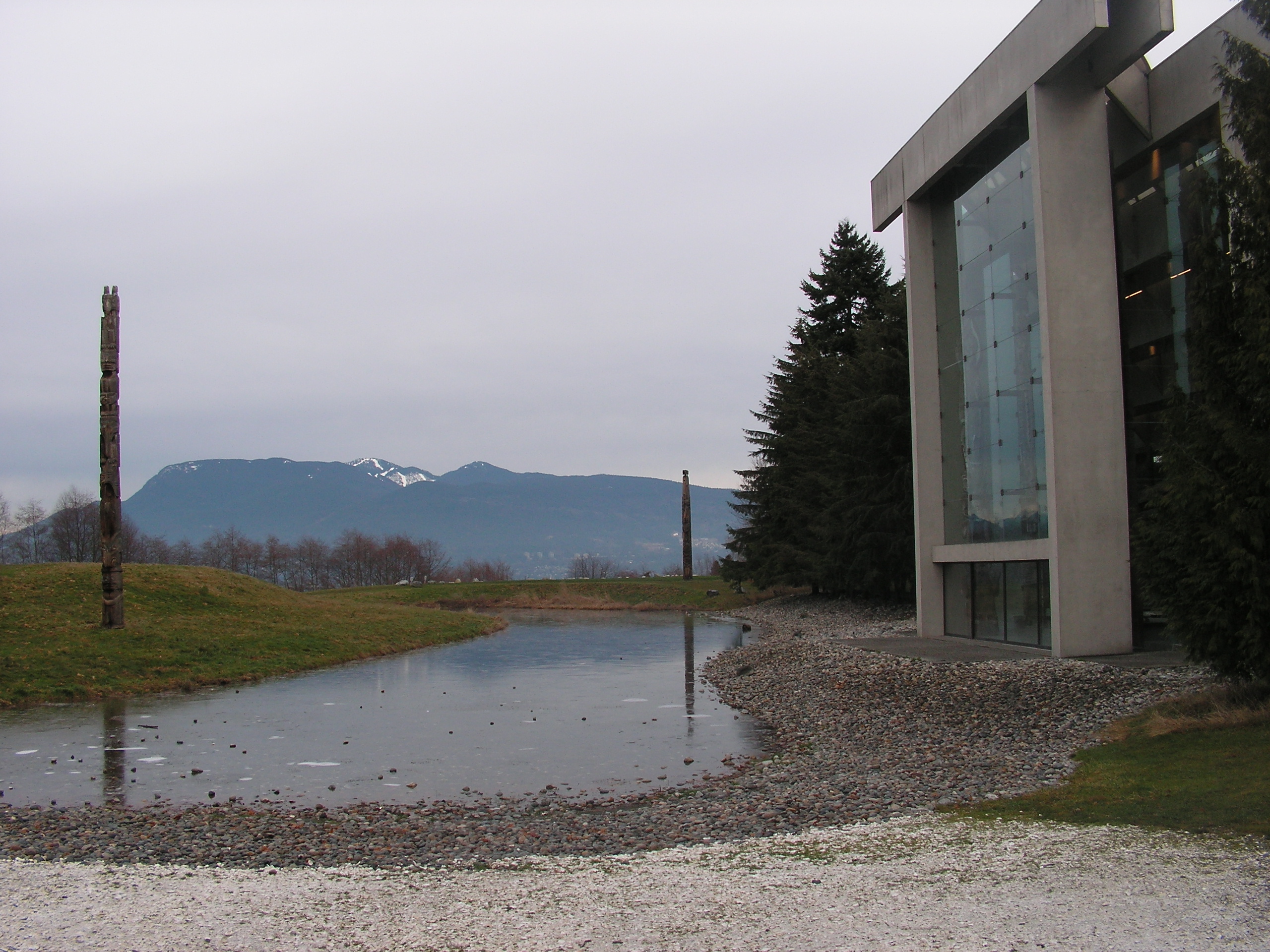
The museum on the far northwest corner of campus, conveniently right around the corner from the journalism school, could not be a more appropriate place to see native dance. It stands on a cliff overlooking Burrard Inlet and the North Shore mountains beyond. (If only this had been an outdoor summer festival!) The land, according to program notes, is “un-ceded traditional territory of the Musqueam Nation”; it is not uncommon here for performing arts venues to make such acknowledgments. The view travels with you inside the galleries, since one wall several stories high is glass. It formed a backdrop for the festival stage set in the main gallery – a wilderness answer to Jazz at Lincoln Center’s Allen Room looking out at the lights of Manhattan.

Native dance is less my fach than classical ballet. But I recently noticed that the cultural events I was attending in Vancouver – the symphony, the Metropolitan Opera’s “Live in HD” broadcasts, the Vancouver Opera live and in person in a couple of weeks, the National Theatre Live from London – were just a little too much like what I would see at home, and that I might be missing an opportunity. The First Nations festival offered an additional, irresistible attraction: dancing with masks. As the owner of one of New York City’s better mask collections, I had to go.

Friday’s opening-night program consisted of six acts, some better than others, from full companies to a solo hoop dancer. Two troupes used masks: the headlining Dancers of Damelahamid and the closing Rainbow Creek Dancers. Watching them, I learned why so many of the masks I’ve seen here in shops galleries have no eyeholes. (In part to avoid buying every mask I see, I have a rule that anything I add to the collection must be wearable – i.e., have eyeholes. Unless, of course, I really, really like one that doesn’t.) Here masks were not necessarily worn on the face. Some, like the bird-faced helmet masks with their long bills, are worn atop the head, like baseball caps with pointy brims, with the dancer’s full face exposed; smaller ones are part of headdresses. Oversized masks, like the ones I saw in the Vancouver Art Gallery some weeks ago, are not worn at all, but carried in front of the dancer. The hinged jaw of Rainbow Creek’s raven mask clacked rhythmically as its hinged jaws opened and closed; wearers of other bird masks, some on their heads, some smaller ones on their hands, followed suit. In the troupe’s closing number, an oversized salmon head bobbed above “water,” then danced, complete with a fluke that waved goodnight. Sadly, I didn’t take my camera — a decision I regret, since a number of people were shooting.

For an ultramodern building, the museum proved surprisingly atmospheric. Pale colored lights played off the totem poles surrounding the audience, suggesting the aurora borealis to an audience facing the night sky. Most haunting was the music, strong on choral, driven by percussion and, in the performance of the visiting Australian Aboriginal dancer Robert Bamblett, a didgeridoo. Of course I couldn’t understand the lyrics in native languages, but that only enhanced the effect.

The program was short on showmanship – too little attention to pacing; too many acoustically challenged speeches by people unskilled at public speaking; an ending that just ended, as opposed to a finale. But then, the point of these dances was never to put on a show. Their purpose was ceremonial, to honor the often-invoked ancestors and carry their traditions into the future. Judging from the audience, which ranged from elders beating time to the music to a crying baby, I’d say they’re succeeding.

Downtown the next evening, Ballet BC presented two new works choreographed by Canadians and a Canadian premiere by a Swede: artistic director Emily Molnar’s black-on-black “between disappearing and becoming”; Aszure Barton’s “Vitulare,” which blends elements of line dance, breakdance and flamenco, with a few shimmies and jazz hands mixed in; and the evening’s title piece, Johan Inger’s “Walking Mad,” a sometimes comedic, sometimes disturbing work to Ravel’s “Bolero” and Arvo Part. The entire program was resoundingly contemporary – not a tutu in sight – and the audience in the Queen Elizabeth Theatre responded, especially to the Barton, with enthusiastic applause, whistles and finally a standing ovation. The Ballet BC dancers seem equally at home on point (some lovely fluttering legs in the Molnar) and in a modern-dance idiom. It’s a company worth watching, as I will do again in the work of my student Suzanne Ahearne, who is documenting the week’s rehearsals and performances as her final project.

On my way to the ballet, I was heartened to see a crowd of perhaps 200 rallying at the adjoining Vancouver Playhouse in support of that theater’s resident company, which had just announced that financial problems were forcing it to close after 49 years. (I celebrated my birthday with a matinee there, a creditable production John Logan’s Tony Award-winning “Red.”) That night was to be the theater’s last performance, but judging by the reviews of “Hunchback,” the better show was outside. “This is a vigil, not a wake,” stated paper signs taped to the walls. Supporters declared their sentiments in messages chalked on the sidewalk: “Do not go gently [sic] into that good night” ; “There is a special providence in the fall of a sparrow,” from “Hamlet”; “Tennessee Williams was here” and “Sir Ian McKellen was here”; most simply but eloquently, “Theatre changes lives.” A poster signed by company members, and later by well-wishers, elaborated: “It is through cultural institutions like this theatre that the collective voice is heard, that consciousness and art has a home, and that life is breathed into the concrete and steel of this city. Vancouver needs culture to stay alive, vibrant, relevant; it’s more than just real estate.” That’s the lesson I’ve been trying to teach all semester, and I’m sure I haven’t said it any better. In an era when harsh economics have forced too many theaters to go dark, can’t someone please find a million dollars to keep this one in business?

Flunking out

“Failure is impossible,” or so said the Susan B. Anthony throw pillow I used to have in my living room. Anthony may have been right about the woman suffrage movement; she was wrong about me. And when failure strikes, it is humbling.

After more than 35 years editing daily newspapers, I’d have sworn there wasn’t an editing job I couldn’t handle. Deadline pressure? The breaking news stories I’ve gotten into various papers ranged from Nixon’s resignation to the Polish shipyard strikes in 1980 to any number of Oscar and Grammy nights – four editions in four hours. Style? Who’s more rigid about style than The New York Times? Technology? I have yet to meet the piece of software I can’t master. Or so I thought.

Last week I underwent training for an online editing service. It shall remain nameless; to paraphrase Shakespeare in “Julius Caesar,” the fault was not in my stars, but in my self. Its ad said freelancers who made a minimum commitment of 12 hours a week could earn $150 to $1,500. (As a point of comparison, Broadway ushering pays $50 a shift, topping out around $400 a week.) Having a fair amount of free time in Vancouver, I thought I’d give it a try as a way to keep a little revenue flowing when the semester and my salary end.

In the immortal words of Desiree Armfeldt: Disaster, darling.

For sale, cheap.

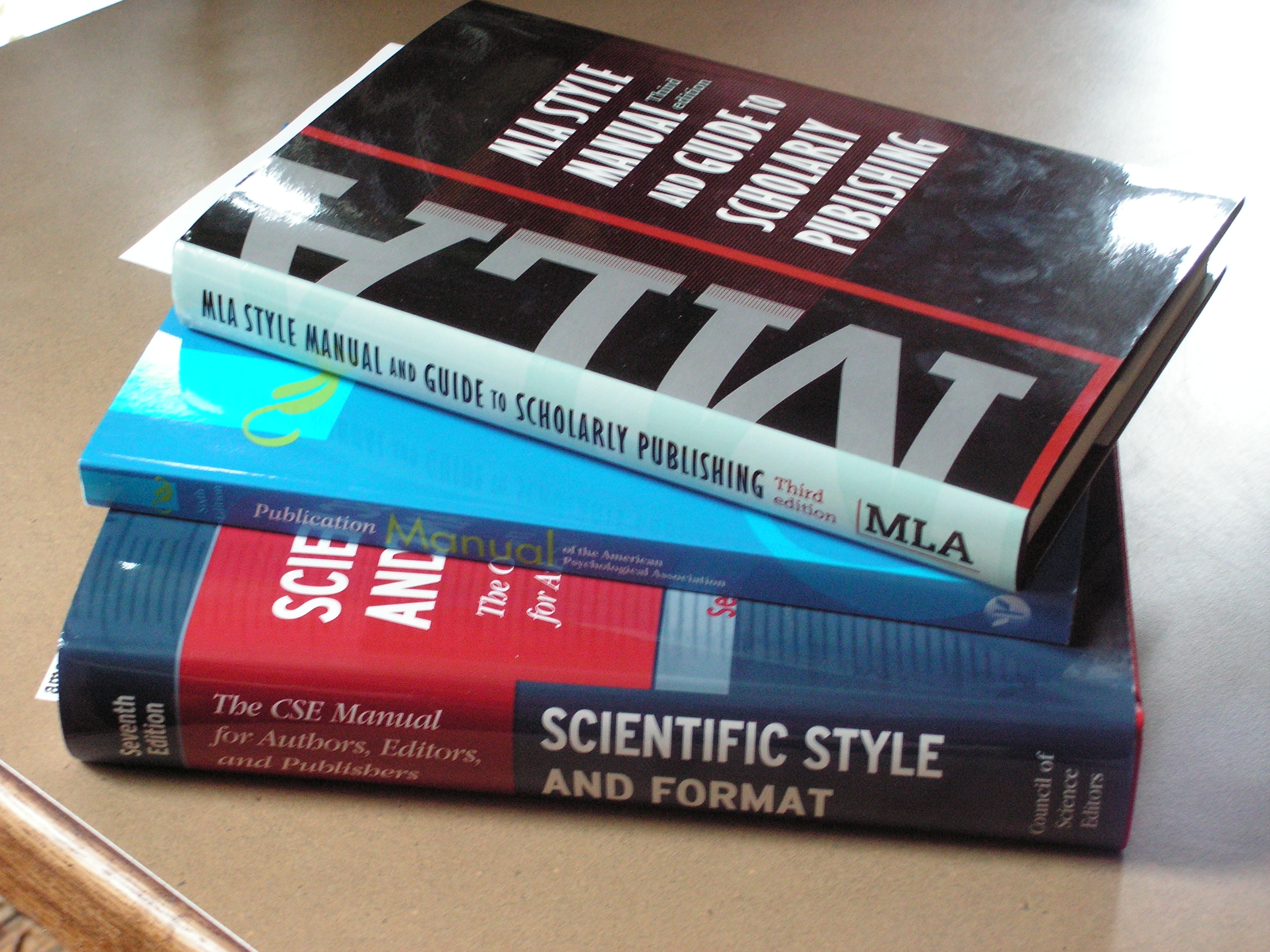
The online screening should have been my clue. On a multiple-choice test of 42 questions, I first scored only about 76 percent, out of the 95 required for further consideration. The spelling and grammar were easy; what surely tripped me up were the citation styles for the various academic style manuals this service uses — Chicago, Modern Language Association, American Psychological Association, Council of Science Editors and more.  I assumed I was disqualified, but to my surprise a senior editor phoned almost immediately to say I had actually done well. She encouraged me to become more familiar with the styles and try again in a couple of weeks. I did, and this time scored almost 92. So I agreed to undergo training, which luckily fell during UBC’s spring break.

It consisted of two one-hour telephone sessions to walk me through the company website and basic procedures. Then I was assigned my first of 10 training documents, a fairly technical 1,000-word assessment of a scholarly article apparently being considered for publication. The editor needed to see it by then end of her shift, eight hours away. 1,000 words in eight hours? In a newsroom, you have 30 minutes if you’re lucky.

But I had to change my computer to settings I didn’t know existed and make copies of the document under at least two different filenames to avoid overwriting the original. I fielded instant messages and e-mails from the senior editor asking when how I was doing, when the copy was coming, why I was having problems after she’d explained everything. (That felt like working in a newsroom.) When I proudly sent off my edit, she sent it back with many revisions, not least the fact that there were at least a dozen instances of double spaces after sentences, when MLA style called for just one. That struck me as rather anal, but I had spent decades working on typesetting systems where those extra spaces didn’t matter. Apparently, they do to the MLA.

By the end of the evening, I was mentally exhausted and ready to quit, but I didn’t want to be a quitter. Three more documents had already landed, due back in less than 48 hours. I saved them for the next day, by which time three more documents had landed. They ranged from a straightforward press release to a highly technical scientific paper to a couple of student essays – one labeled as a journalism class assignment, one possibly ESL or possibly middle-school. Moreover, they called for at least three different styles. Now I’m no stranger to stylebooks; I’ve even helped to rewrite one, The Boston Globe’s in the 1980s. But this was too much, too fast. In the meantime, the instant messages, e-mails and, worst of all, revisions kept coming at me.

I couldn’t do it. I could not believe how hard this work was.

In three and a half days, I completed only six documents. My hands ached; my laptop was visibly slowing down because of so many windows open at the same time and so much added software. Two nights in a row, I had to take a sleeping pill to turn off my brain. “For this kind of stress,” I told a friend, “I might as well go back to The Times.”

“I see now that I was unprepared for the kind of editing you do,” I wrote in the e-mail announcing my bailout. “The learning curve is just too steep.” I’ve edited two doctoral dissertations, but even they had not prepared me for what a different world academia is. Thank goodness I teach journalism, not academic writing. If ever I’m hired for a publish-or-perish job, journalism is what I’ll have to publish.

Now that my hands have stopped hurting and I can sleep again, I see an opportunity to learn from failure. In some ways, those three and a half days were a waste of time; I could have spent them working on an article on Vancouver’s Chinese heritage that would pay three times as much as a week of this editing. Still, I tried something new and learned that it wasn’t right for me. In the finite amount of time I have left of this planet, I need to focus on the things I do well. You wouldn’t believe how much better I felt once I got myself up and out to Chinatown to start on that article.

Judging from what I saw, I respect this company’s rigor, efficiency and professionalism. As a teacher, I do have reservations about letting students pay to have their work edited: shouldn’t their teachers see their raw copy and know just what they’re capable of? But overall, my hat is off to the editors who do for this company what I ultimately couldn’t. At The New York Times, the tryout for a copyediting job is (or was when I did it 24 years ago) a week on one of the news desks. I suspect these people would do well; they already know AP style.

The manuals in which I invested will go to either the UBC bookstore, if it will pay cash, or to Koerner Library as a donation. As a revenue stream, ushering on Broadway is a lot less stressful and a lot more fun. I’m also thinking of starting my own service, Real World Editing – no academic convolutions, just good solid English communication. Your documents may not come back 100 percent perfect – what piece of writing ever is? — but they’ll be much improved. Any takers?